Best Competitor Monitoring Tools 2026
Expert reviews of competitor price monitoring tools for e-commerce. Real testing, pricing comparisons and honest recommendations.
4 competitor price intelligence platforms reviewed and verified — 2026.

Compare enterprise vs mid-market price scrapers in our deep dive:
2026 Competitor Monitoring Tools Comparison
Compare scraping accuracy, anti-bot bypass mechanisms, screenshot proof capabilities, update cadence, and pricing across top e-commerce monitoring platforms.
| Tool | Scraping / Bot Bypass | Update Cadence | MAP & Screenshot Proof | Dynamic Repricing | Starting Price | Review |
|---|---|---|---|---|---|---|
| Price2Spy Stealth IP Technology | Residential IP Rotation + JS Rendering | Up to 8x Daily / On-Demand | Full (Timestamped PDF/PNG) | Formula Repricing Module | $39.95/mo | View Review → |
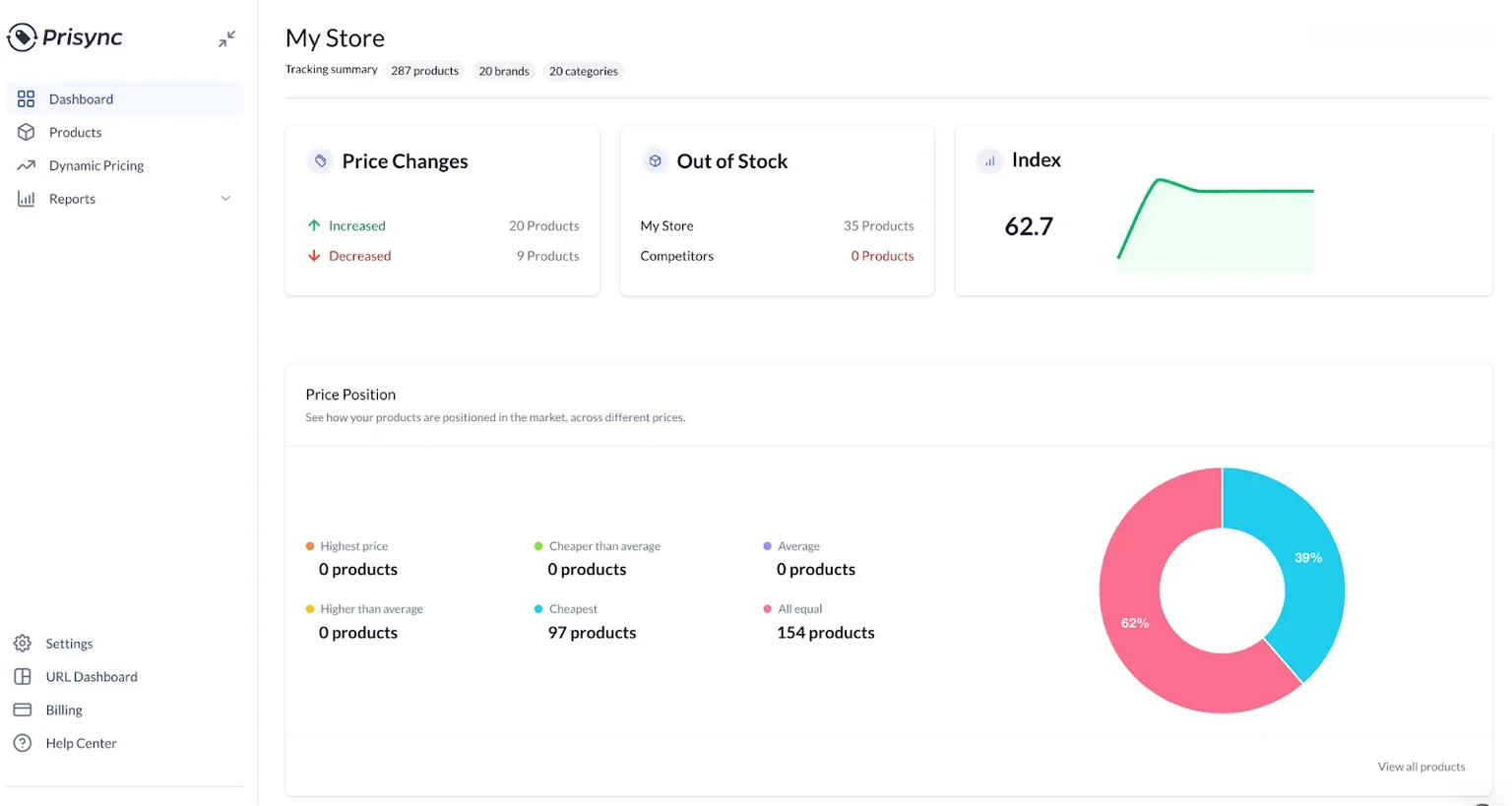
| Prisync E-Commerce Native | Multi-Channel Scraping + Direct APIs | 4x to 24x Daily | Yes (MAP Violation Alerts) | Built-in Native Engine | $59/mo | View Review → |
| Minderest Enterprise & Omni-Channel | AI Catalogue Matching + InStore™ App | Continuous / Configurable SLAs | Enterprise Legal Dossiers | ERP / Pricing Engine Connectors | Custom (Enterprise) | View Review → |
| Visualping Visual DOM Change Alerting | DOM & Visual Pixel Difference | 5-Min to Daily Intervals | Visual Change Screenshots | No (Alerts Only) | $10/mo | View Review → |
What Is Competitor Price Monitoring?
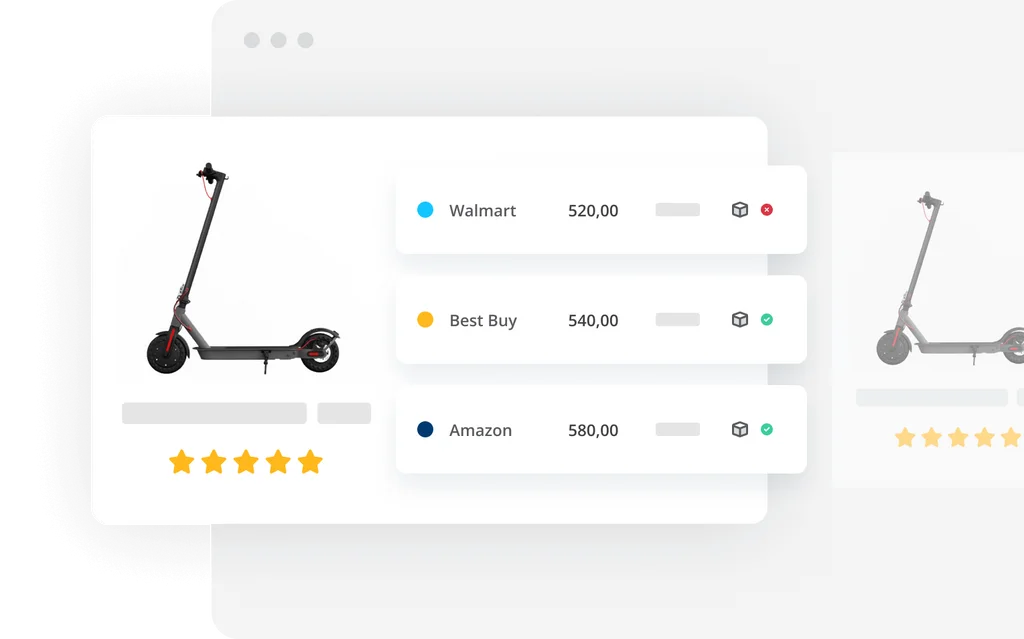
Competitor price monitoring software tracks the prices your competitors charge for identical or equivalent products in real time across online stores, marketplaces like Amazon and Walmart, and comparison search engines like Google Shopping. Rather than relying on manual checks—which break down once your inventory exceeds 20 SKUs—automated monitoring continuously gathers clean price, shipping, stock, and promotional intelligence.
The best tools go far beyond simple scraping. They capture historical price elasticity trends, detect out-of-stock spikes among rivals (allowing you to raise margins safely), and directly feed data into automated repricers or e-commerce profit analytics dashboards.
For a complete breakdown on setting up your tracking infrastructure, read our comprehensive guide on How to Monitor Competitor Prices in 2026.
What Competitor Monitoring Tools Track
A comprehensive competitor monitoring tool tracks: competitor prices across all sales channels (own website, Amazon, eBay, Google Shopping), price history and trend data, stock availability and out-of-stock events, promotional and sale pricing, MAP (Minimum Advertised Price) violations, and currency-adjusted pricing for international competitors.
How to Choose a Competitor Monitoring Tool
1. Channel Coverage & Bot Protection
Confirm the tool can monitor all channels where your competitors sell—from proprietary Shopify and Magento stores to Amazon, eBay, and Google Shopping. If your rivals use advanced Cloudflare or Akamai bot protections, verify that the tool offers residential proxies and stealth IP features like Price2Spy.
2. Update Frequency & Scraping SLAs
Price monitoring is only useful if the data is current. Check how often each tool updates competitor prices—hourly, daily or on-demand. In fast-moving categories where competitor prices change multiple times per day, infrequent updates mean you're always reacting to stale data. Tools like Prisync offer up to 24 crawls per day on upper tiers.
3. Dynamic Pricing Integration & Automation
Some monitoring tools are data-only—they show you what competitors are doing but don't act on it. Others include dynamic pricing rules that automatically adjust your prices in response to competitor changes. If you sell primarily on Amazon, you may want a dedicated Amazon repricing tool paired with price intelligence feeds.
4. MAP Monitoring & Legal Verification
For brands that enforce Minimum Advertised Price policies across authorized dealer networks, MAP monitoring is essential. Tools like Minderest and Price2Spy capture timestamped screenshots and automated violation notices to hold unauthorized discounting accountable.
Competitor Monitoring FAQ
How is competitor monitoring different from repricing?
Competitor monitoring collects and displays price intelligence—it tells you what competitors are charging. Repricing acts on that intelligence by automatically adjusting your own prices. Some tools combine both; others specialise in one. For instance, Prisync includes both monitoring and dynamic pricing in a single platform, whereas specialized Amazon repricers focus on real-time Buy Box algorithms.
Can competitor monitoring tools track prices on any website?
Most tools can track prices on any publicly accessible webpage, including competitor websites, marketplaces and comparison engines. However, the reliability of crawling varies by site—some competitor websites use bot detection or JavaScript rendering that makes automated tracking harder. Platforms equipped with headless browsers and rotating residential IPs handle anti-bot friction seamlessly.
How do competitor price monitoring tools handle anti-scraping and bot protection?
Modern price scrapers utilize advanced proxy networks, IP rotation, and human-like interaction timing to avoid Cloudflare, DataDome, and CAPTCHA blocks. Enterprise-grade tools like Price2Spy use Stealth IP tech specifically engineered for difficult-to-scrape e-commerce stores.
How does MAP monitoring work to protect brand margins?
Minimum Advertised Price (MAP) monitoring allows brands to track authorized and unauthorized resellers across all digital channels. When a seller lists below MAP, the software logs a timestamped screenshot, detects the merchant identifier, and generates an enforcement audit trail.
What is the difference between URL-based tracking and automated catalogue matching?
URL-based tracking requires you or your team to manually map a competitor's product URL to your SKU. Automated catalogue matching (featured in Minderest) uses machine learning to match EANs, UPCs, MPNs, and image signatures across entire competitor domains without manual link setup.
How many competitors can I track?
This depends on your plan tier. Entry-level plans typically support tracking against 50 to 100 competitors across a limited product catalogue. Higher tiers support thousands of competitors and larger catalogues. Map your catalogue size and key competitor count before choosing a plan.
How often should e-commerce stores update competitor price data?
For competitive consumer goods on Amazon, Walmart, or Google Shopping, updating price data every 2 to 6 hours is optimal. For private label or specialized B2B goods, daily or twice-daily scraping provides sufficient market visibility without exhausting API quotas.
Is competitor price monitoring legal?
Yes. Monitoring publicly available prices is legal in virtually all jurisdictions. You are simply automating what any person could do manually by visiting a website. Reputable monitoring tools operate responsibly by avoiding server overload and respecting public data principles.
How do I get started with competitor monitoring?
Start by listing the 5 to 10 competitors that most directly affect your sales, and the 20 to 30 products where price sensitivity is highest. Follow our step-by-step competitor monitoring setup guide to configure your initial price alerts and testing thresholds.